
A routine dental examination at Canyon Dental Associates is your first line of defense for a healthy smile. During your visit, our team carefully checks your teeth, gums, jaw, and soft tissues using modern digital X-rays and hands-on assessment to catch potential issues before they become painful or expensive problems.
These exams typically happen every six months and play a crucial role in detecting tooth decay, gum disease, and oral cancer at their earliest, most treatable stages. At our Corona, CA practice, Dr. Shikha Banerjee and our experienced team have been helping families maintain optimal oral health since 2007. We combine thorough visual examination techniques with advanced technology to make every dental appointment comfortable, efficient, and genuinely beneficial for your long-term dental health.
Whether you’re new to our office or a longtime patient, understanding what happens during a typical dental exam can help you feel prepared and relaxed. Let’s walk through exactly what you can expect.
What Happens During a Routine Dental Exam?
A typical routine dental exam at Canyon Dental Associates takes about 60 minutes from the moment you check in until you head home. Your visit flows through several connected steps: updating your medical history, capturing digital X-rays when needed, measuring gum health, cleaning and polishing your teeth, and finishing with a thorough examination by Dr. Banerjee.
Both adults and children receive age-appropriate care tailored to their individual needs. We use modern technology like digital X-rays and intraoral cameras to make assessments more precise while keeping you comfortable throughout the process.
The entire experience is designed to be efficient and as pain-free as possible. Our team in Corona, CA takes pride in explaining each step so you always know what’s happening and why.
1. Medical & Dental History Review
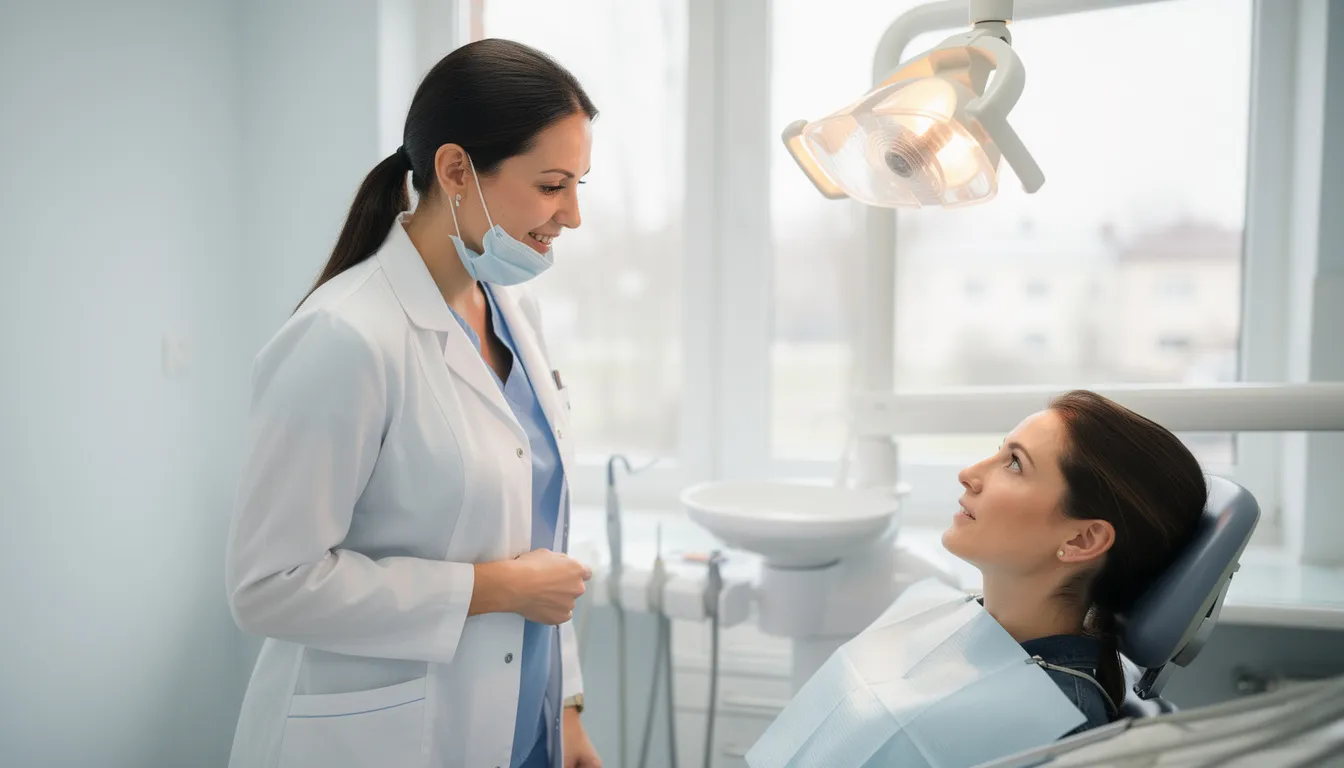
Every exam begins with a quick conversation about your health. Our team updates your medical history, including any medications you’re taking, recent health changes like new diagnoses or pregnancy, and conditions such as diabetes or heart issues that can affect your oral cavity.
We’ll also ask about symptoms you may have noticed: sensitivity to hot or cold, bleeding gums, grinding or clenching at night, or any pain when chewing. This is also a great time to discuss cosmetic goals like teeth whitening or straightening if they’re on your mind.
This review takes about 5-10 minutes and helps us tailor everything that follows. The more we know about your overall health, the better we can customize your exam, X-rays, and any treatment recommendations.
Pro tip: Bring a written list of your current medications and any questions you want to discuss. It makes this step faster and ensures nothing gets overlooked.
2. Digital X-Rays and Imaging
Digital X-rays give us a detailed view beneath the surface of your teeth and gums where the naked eye can’t see. These images take just 10-15 minutes to capture and use up to 90% less radiation than older film systems.
During a routine dental exam, we typically use:
| X-Ray Type | What It Shows | When It’s Used |
|---|---|---|
| Bitewing X-rays | Cavities between back teeth, bone levels | Most routine visits |
| Panoramic X-rays | Full jaw, tooth development, wisdom teeth | Periodically for a comprehensive view |
| Periapical X-rays | Individual tooth roots and surrounding bone | When specific concerns arise |
Not every visit requires new X-rays. Following American Dental Association guidelines, we determine frequency based on your age, decay risk, and prior history. These images help with early detection of decay, bone loss, infections, and problems hiding beneath existing fillings or crowns.
3. Gum Disease (Periodontal) Assessment
Your dental hygienist gently measures the depth of periodontal pockets around each tooth using a thin probe. Healthy pockets typically measure 1-3 millimeters with little or no bleeding. Deeper pockets can indicate gingivitis or more advanced periodontal disease.
During this assessment, we look for:
- Redness, swelling, or inflammation
- Bleeding during probing
- Gum recession exposing tooth roots
- Tartar buildup below the gumline
- Changes in bone supporting structures
All measurements are recorded in your chart so we can compare them over time and monitor trends in your gum and bone health. This tracking is essential because gum disease often progresses silently without causing pain.
Catching periodontal disease early matters more than most people realize. Statistics show that 47.2% of U.S. adults over 30 have some form of gum disease. Early intervention can prevent tooth loss and help you avoid more complex, costly treatments down the road.
4. Visual Examination of Teeth and Existing Dental Work
The hygienist and dentist carefully examine each tooth with a mirror and explorer, checking for cavities, cracks, and wear patterns from grinding. We also assess the integrity of existing restorations like fillings, crowns, bridges, and implants to ensure they’re functioning well.
If needed, we may use sensitivity tests with cold air to evaluate nerve health and detect decay that hasn’t become visible yet. Our intraoral cameras can display close-up images on a screen, helping you see exactly what we see. Many patients find that this visual examination approach helps them better understand their oral health.
This thorough visual examination catches problems early when they’re simpler and less expensive to treat. A small cavity addressed now prevents the need for a root canal or extraction later.
5. Oral Cancer & Soft Tissue Screening
Every routine dental examination includes an oral cancer screening that takes just 2-5 minutes. We examine your cheeks, lips, tongue, floor and roof of your mouth, throat, and tonsil area for any suspicious spots, lesions, or color changes.
We also palpate your jawline and the sides of your neck, checking for lumps, tenderness, or swollen lymph nodes. While most findings turn out to be completely benign, oral cancer causes approximately 7,500 deaths in the U.S. each year. The good news? When detected early, survival rates reach 90%.
This screening is quick, noninvasive, and included at every visit. It’s one of those simple steps that can genuinely be life-threatening to skip, which is why we prioritize it for every patient.
6. Professional Cleaning and Polishing
After the exam portion, your hygienist removes plaque and tartar from above and below the gumline. We use a combination of ultrasonic scalers and hand instruments to clear away buildup that regular brushing and flossing can’t reach.
The professional cleaning process includes:
- Scaling to remove hard tartar deposits
- Cleaning between teeth and along the gumline
- Polishing to smooth tooth surfaces and reduce future plaque buildup
- Flossing between every tooth
- Fluoride application when appropriate (especially for children and teens)
Fluoride treatments strengthen enamel and can reduce decay risk by 25-40%. If you experience any sensitivity during cleaning, just let us know. We can adjust our techniques, use topical numbing gel, or work at a slower pace to keep you comfortable.
7. Final Dentist Exam & Discussion of Findings
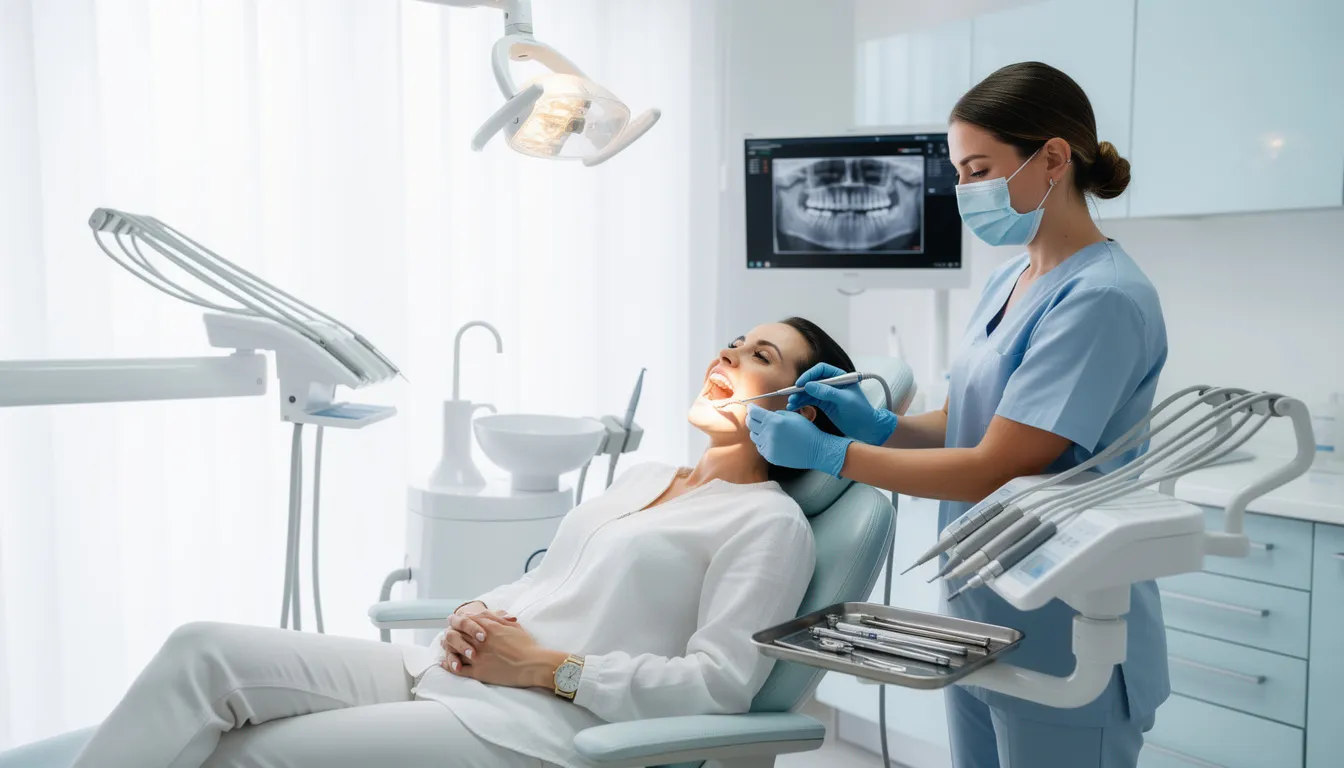
Dr. Banerjee reviews your X-rays, periodontal measurements, and hygienist notes before performing her own detailed examination. She checks for any signs of tooth decay, gum disease, bite issues, or worn teeth.
She also evaluates your temporomandibular joint function, checking how your jaw opens, closes, and moves. Any clicking, popping, or tenderness gets noted and discussed.
Findings are explained in clear, straightforward terms. For example: “There’s a small cavity forming on your upper left molar that we can treat with a simple filling” or “Your lower front teeth show some early gum inflammation that better flossing will help.”
Your visit concludes with time for questions, personalized prevention tips tailored to your mouth, and a proposed treatment plan if any issues require attention. We believe you deserve to understand exactly what’s going on with your dental health.
Why Routine Dental Exams Are So Important
For families in Corona, CA, routine dental exams every six months are the foundation of preventing bigger dental problems. These regular checkups allow us to catch issues when they’re small, saving you money, avoiding pain, and protecting your general health.
The American Dental Association recommends regular dental exams tailored to each person’s risk level, with most people benefiting from twice-yearly visits. At Canyon Dental Associates, we’ve been caring for Corona families since 2007, using these exams to build personalized long-term oral health plans for patients of all ages.
Key benefits of regular dental checkups:
- Early detection of cavities and gum disease before symptoms appear
- Professional removal of tartar that home brushing can’t eliminate
- Oral cancer screening at every visit
- Monitoring of existing dental work for signs of wear
- Personalized advice for maintaining optimal oral health at home
Early Detection of Tooth Decay and Gum Disease
Small cavities and mild gingivitis rarely cause pain in their early stages. Without an oral exam and X-rays, these problems can grow silently until they require more extensive treatment. That’s why regular dental exams are so valuable.
Early treatment of decay usually means small, conservative fillings instead of root canals or extractions. Consider the difference:
| Problem Stage | Typical Treatment | Approximate Cost | Time Required |
|---|---|---|---|
| Early cavity | Simple filling | $150-$250 | 30-45 minutes |
| Advanced decay | Crown or root canal | $1,000-$2,000+ | Multiple visits |
| Severe infection | Extraction and implant | $3,000-$5,000+ | Months of treatment |
Catching gum disease early can stop or slow bone loss and reduce the risk of tooth loss. It also helps prevent chronic bad breath and the need for deep cleaning procedures that take more time and cost more than routine maintenance.
Protection of Overall Health
Your oral health connects directly to your overall health in ways researchers continue to discover. Studies cited by the CDC and ADA show links between chronic gum inflammation and conditions including diabetes, heart disease, and pregnancy complications.
People with periodontal disease face 2-3 times higher risk for certain cardiovascular issues. Maintaining healthy gums isn’t just about your smile. It’s about protecting your whole body.
Routine exams also give your dentist a chance to spot signs of:
- Teeth grinding that may indicate stress or sleep issues
- Acid erosion from reflux or dietary habits
- Dry mouth that can accelerate decay
- Sleep-disordered breathing indicators
A healthy mouth improves quality of life, comfort while eating, and confidence in social and professional settings. These benefits extend far beyond the dental chair.
Financial and Time Savings Over the Long Term
Twice-yearly exams and cleanings are relatively low-cost compared to extensive restorative work. They’re an investment that pays dividends in avoided pain, preserved teeth, and lower lifetime dental costs.
Consider what happens when someone skips exams for 3-4 years: multiple cavities may develop, gum disease can progress, and what could have been prevented with simple cleanings now requires fillings, deep cleanings, and possibly crowns. Research suggests comprehensive preventive baselines can reduce lifetime dental costs by up to 50%.
Many dental insurance plans cover routine exams and cleanings at or near 100% as preventive services. These are benefits you’ve already paid for through premiums. Using them protects your investment and your teeth.
Even patients without dental insurance benefit from routine care. Catching problems early still costs far less than treating advanced decay or gum disease that has damaged bone.
How to Prepare for Your Dental Exam
A little preparation makes your dental appointment smoother and less stressful. At Canyon Dental Associates, we welcome questions and want you to feel comfortable and informed at every visit. Here’s how to get ready.
Before the Appointment
- Continue your normal brushing and flossing routine. No need to “over-scrub” the night before
- Make a written list of questions, concerns, or goals (tooth sensitivity, interest in whitening, grinding issues)
- Gather information on current medications and any recent health changes
- Note any dental work done at other offices since your last visit
- For children, describe the visit in positive terms like “tooth checkup” and avoid scary language
The Day of Your Exam
- Arrive 10-15 minutes early to update forms and settle in
- A light brushing beforehand is helpful, but aggressive scrubbing can irritate gums
- Tell our team if you feel nervous or have dental anxiety so we can adjust our approach
- Bring headphones or a favorite show for children if that helps them relax
- Wear comfortable clothing and leave plenty of time so you’re not rushed
How Long Does a Routine Dental Exam Take?
A standard exam and cleaning at Canyon Dental Associates typically takes about 60 minutes for an adult. This includes check-in, X-rays when needed, professional cleaning, the dentist exam, and discussion of findings.
Approximate time breakdown:
| Step | Duration |
|---|---|
| Check-in and history review | 5-10 minutes |
| Digital X-rays (when needed) | 10-15 minutes |
| Professional cleaning and polishing | 20-30 minutes |
| Dentist exam and discussion | 10-15 minutes |
First-time visits, extensive X-rays, or complex treatment planning may run closer to 75-90 minutes. Children’s visits are often shorter, typically 30-45 minutes, depending on age and what’s needed.
We respect your schedule and work hard to start and finish on time. For busy Corona parents, combining family appointments with siblings back-to-back can save time and simplify scheduling.
Routine Exams for the Whole Family
Canyon Dental Associates provides routine exams for children, teens, adults, and seniors throughout Corona, CA and the surrounding area. Having one family dentist simplifies records, scheduling, and long-term preventive planning across generations.
Our focus areas shift based on age and life stage, but the commitment to gentle, thorough care remains constant. Our friendly team helps children and anxious adults feel more relaxed from the moment they walk through our door.
Children and Teens
Dental exams for children check tooth eruption patterns, bite development, and cavity risk. We recommend starting visits around age one or when the first tooth appears to establish comfort with the dental office early.
For younger children, we often recommend:
- Dental sealants to protect chewing surfaces of molars
- Fluoride treatments to strengthen developing enamel
- Age-appropriate education on brushing and flossing techniques
- Sports mouthguards for active kids
As children grow into teens, we monitor wisdom teeth development and discuss habits that affect oral hygiene, like soda consumption or vaping. Regular dental exams during these years help catch issues before they require attention from specialists.
Adults and Seniors
Adult exams focus on detecting decay, monitoring gum health, evaluating existing restorations, and discussing cosmetic goals like whitening, veneers, or bonding. We check the chewing surfaces of teeth for wear, assess bite alignment, and look for signs of grinding.
For seniors, additional concerns often include:
- Dry mouth from medications, which increases decay risk
- Root decay on exposed tooth surfaces
- Worn teeth from decades of use
- Monitoring dentures, partials, or implants for fit and function
- Coordinating dental care with medical conditions
Routine exams help protect your investments in crowns, bridges, implants, and other restorative work. We work with patients managing multiple health conditions to ensure dental care fits safely into their overall treatment plans.

Common Questions About Routine Dental Examinations
Patients in Corona, CA often have practical questions about what to expect. Here are answers to the most common ones. Our team is always happy to review your specific situation during your visit or by phone.
How Often Should You Have a Dental Exam?
Most patients benefit from exams and cleanings every six months. This schedule works well for maintaining optimal oral health and catching problems early for most adults and children.
Some higher-risk individuals may need visits every three to four months. This includes people with active gum disease, high cavity rates, diabetes, or those who smoke. Dr. Banerjee will recommend a customized schedule based on your decay history, gum health, and overall risk factors.
Skipping exams allows small, simple problems to become larger and more expensive to treat. Learn more about our preventive dental care services to see how regular visits protect your smile.
Will a Routine Dental Exam Hurt?
Most routine exams and cleanings are comfortable for patients with healthy gums. Those with inflamed gums or heavy tartar buildup may feel some temporary tenderness during cleaning, but this usually subsides quickly.
Our team uses topical numbing gel, gentler techniques, and slower pacing when needed to minimize any discomfort. If you feel anxious, please share your concerns before we begin. We can explain each step in advance and adjust our approach throughout your appointment.
A bit of short-lived sensitivity is far preferable to the pain from untreated infections or advanced decay that require attention later.
Does Insurance Cover Routine Dental Examinations?
Many dental insurance plans cover routine exams, cleanings, and X-rays either fully or at a high percentage as preventive services. Most plans allow two preventive visits per year, making these essentially free for covered patients.
Coverage and frequency limits vary by plan, so our office team can help verify your benefits before or during your visit. We want you to understand exactly what’s covered so there are no surprises.
If you don’t have insurance, routine exams still represent smart spending. Early detection through regular visits lowers long-term treatment costs significantly compared to waiting until problems become severe.
What If the Dentist Finds a Problem?
When decay, gum disease, or other issues are detected, Dr. Banerjee reviews X-rays and photos with you and explains exactly what’s happening in clear terms. You’ll never be left wondering what’s wrong or what comes next.
You’ll receive a personalized treatment plan with options, estimated costs, and realistic timeframes. We believe in informed consent, meaning you understand your choices and make the final decision about your care.
Most dental issues are easier and more comfortable to treat when discovered at a routine exam. A small cavity filled today prevents the painful abscess that sends patients to emergency dental care later. Early treatment is almost always simpler, faster, and less expensive.
Next Steps: Schedule Your Routine Dental Exam in Corona, CA
Your smile and your family’s smiles deserve the care that comes from regular dental exams with a team that knows you. Taking an hour twice a year for your dental health is one of the simplest investments you can make in your overall wellbeing.
At Canyon Dental Associates, we combine early detection, gentle care, modern technology, and a genuine commitment to your comfort. Whether you’re due for a checkup, new to the area, or looking for a family dentist who can care for everyone from toddlers to grandparents, we’re here to help.
Ready to schedule your routine dental examination?
📞 Call us: 951-273-0555 📍 Visit us: 2097 Compton Ave #102, Corona, CA 92881
Contact Canyon Dental Associates today to book your appointment or schedule back-to-back family visits for added convenience. We look forward to helping you maintain a healthy, confident smile for years to come.
Related reading: The Importance of Routine Exam Dentist Visits