
If you wear traditional dentures, you probably know the routine: adhesive in the morning, a careful eye on what you eat, and the occasional moment when a denture shifts while you are talking or laughing.
Implant supported dentures solve the biggest problem with conventional dentures, which is that nothing holds them in place except suction, adhesive and the shape of your gums. Instead, the denture attaches to dental implants placed in the jaw. Here is how implant supported dentures work, who they suit, what the process and healing time look like, and how cost and PPO coverage usually work.
What Are Implant Supported Dentures?
An implant supported denture is a full denture that attaches to a small number of titanium implants in your jawbone rather than resting on your gums alone.
Dental implants act as replacement tooth roots. Once they have fused with the surrounding bone, through a process called osseointegration, they give the denture a stable anchor. Depending on the design, the denture either snaps on and off the implants or is fixed in place and only removed by your dentist.
Implant supported dentures are most often used to replace an entire arch, upper or lower, when most or all natural teeth are missing or when the remaining teeth are failing. For a single tooth or several teeth, an individual implant or bridge is usually the better fit. They are especially common for the lower jaw, where a traditional lower denture tends to be least stable.
Implant Supported Dentures vs. Traditional Dentures
Traditional dentures rest on the gums. Upper dentures rely on suction against the palate, and lower dentures sit on a narrow ridge with the tongue moving around them, which is why lower dentures are the ones patients complain about most.
Unlike traditional dentures, implant supported dentures are held by dental implants anchored in bone. That brings several practical differences:
- Improved stability. Implant supported dentures attach to the implants, so they do not slip or click when you eat or speak.
- Better chewing. Many patients can eat a wider range of foods with more confidence.
- No adhesive for most designs.
- Less palate coverage. An upper implant denture can often be made without covering the roof of the mouth, which many people find more comfortable.
- Bone preservation. When teeth are lost, the jawbone gradually shrinks. Implants place load on the bone, which helps slow that bone loss. Regular dentures do not.
The trade-offs are cost, surgery and time. Implant placement is a surgical procedure, and the full process takes months rather than weeks.
| Traditional removable dentures | Implant supported dentures | |
|---|---|---|
| Held in place by | Suction, adhesive, gum ridge | Dental implants anchored in bone |
| Stability | Can shift, especially lower dentures | Securely attached |
| Effect on jawbone | Bone loss continues | Helps preserve surrounding bone |
| Surgery | None | Implant surgery required |
| Timeline | Weeks | Several months including healing |
Fixed Implant Supported Dentures vs. Removable Options
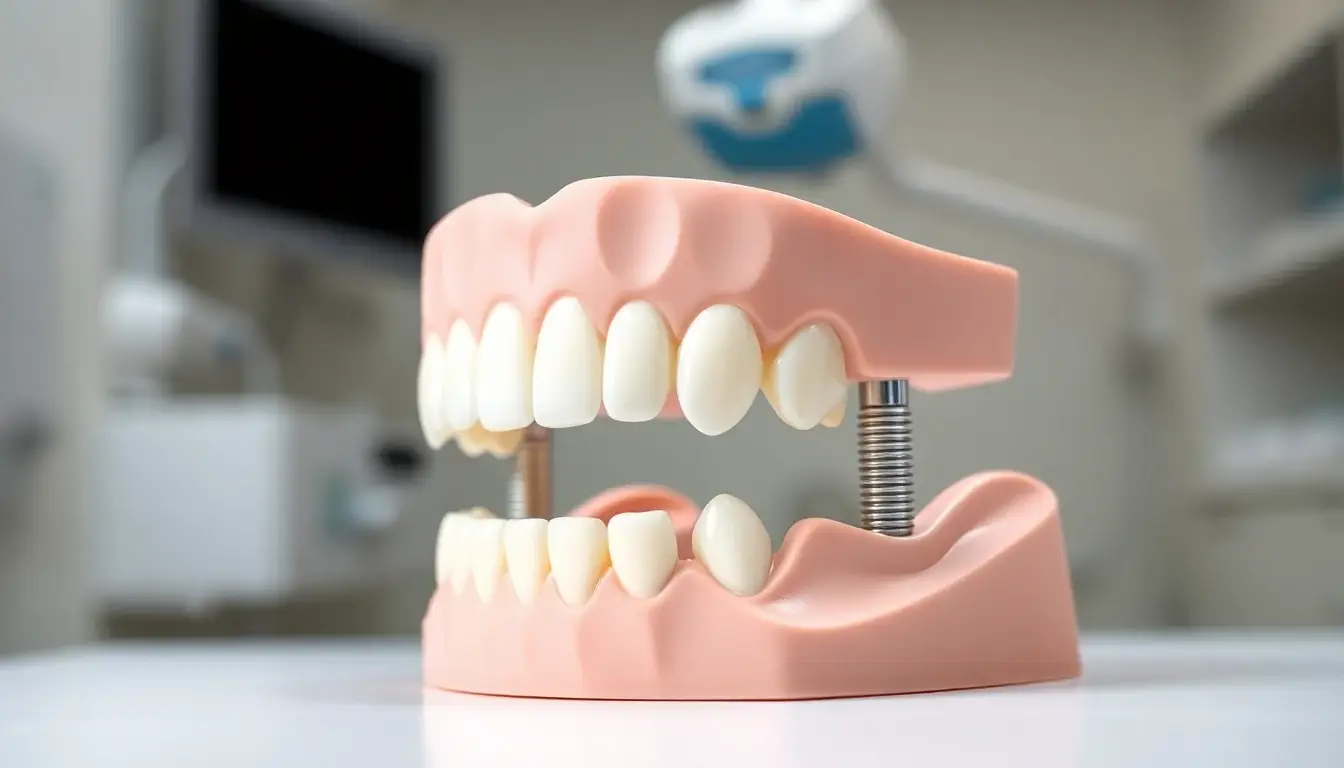
There are two main types, and the right one depends on your bone, your budget and your preferences.
Removable implant dentures (snap-in or overdentures). The denture clips onto attachments on the implants. You take it out each night to clean it and the implants. This option often needs fewer implants, and it usually costs less than a fixed design.
Fixed implant supported dentures. A fixed implant denture is screwed or secured to the implants and stays in place full time. Only your dentist removes it, for cleanings and maintenance. Fixed dentures feel closer to natural teeth, but they typically need more implants and sufficient jawbone density, and they cost more.
Both are real improvements over conventional dentures. Your dentist will explain which fixed and removable options fit your situation during the initial consultation.
How Many Implants Do Implant Supported Dentures Need?
It depends on the jaw, the bone and the type of denture.
- Removable lower dentures are often supported by two to four implants.
- Upper dentures usually need more implants than lower ones, because upper bone is generally softer.
- Fixed implant supported dentures typically need four or more implants per arch to carry a full set of teeth securely.
Fewer implants can mean lower cost and less surgery, but the number is a clinical decision based on bone volume, bite forces and how the final teeth need to be supported. There is no one-size answer, and a good treatment plan explains why a specific number is recommended for you.
Are You a Candidate for Implant Supported Dentures?

Many patients who are missing most or all of their teeth are candidates. Good candidates generally have:
- Enough jawbone to hold the implants, or are willing to have bone grafting first
- Healthy gums without active gum disease
- Good general health, since implant surgery requires healing; your medical history matters
- A commitment to home care and regular checkups
Some conditions affect healing and need to be discussed openly, including uncontrolled diabetes, smoking, and certain medications. They do not always rule implants out, but they can change the plan.
Bone Grafting When Bone Volume Is Low
If you have worn dentures for many years, or teeth have been missing a long time, the jaw may have lost bone. Dental bone grafting can rebuild the area so implants have enough support. Grafting adds time to the process, usually a few months of healing before implant placement, but it opens up implant treatment for many patients who would otherwise not qualify.
The Dental Implant Placement Process, Step by Step
Every case is different, but most implant supported dentures follow the same general sequence.
- Initial consultation. A full exam, x rays or 3D imaging to assess bone density, a review of your medical history, and a discussion of goals and options. You leave with a personalized treatment plan and cost estimate.
- Extractions, if needed. Any failing teeth are removed. A temporary denture is often provided so you are not without teeth.
- Bone grafting, if needed. Done at the extraction appointment or separately.
- Dental implant placement. Several implants are surgically positioned in the jaw under local anesthesia, by your dentist or an oral surgeon depending on the complexity of the case. Canyon Dental Associates does not offer sedation; if you are anxious about surgery, tell us early so we can talk through your options, including referral where appropriate.
- Healing period. The implants integrate with the bone. You wear a healing denture or temporary teeth during this time.
- Final denture. Once the implants are stable, your custom denture is made and attached.
The Healing Period
The healing time after implant placement is usually measured in months, commonly around three to six, depending on bone quality, grafting and the location of the implants. Some cases allow temporary teeth to be attached soon after surgery; others need full healing first. You will receive detailed aftercare instructions for the surgical sites, including soft foods for the first days and how to keep the area clean.
Getting Your Final Denture and Final Teeth
When the final denture is fitted, your dentist checks your bite, comfort and appearance carefully. Custom made dentures are designed for a natural appearance that suits your face, so the final teeth are as much about appearance as about function.
Implant Supported Dentures Cost and PPO Coverage
Implant supported dentures cost more than traditional dentures, and the final cost varies widely. It depends on:
- How many implants are needed
- Whether the denture is fixed or removable
- Extractions, bone grafting or other preparatory work
- Materials used for the final denture
- Whether one arch or both arches are treated
Because the range is so wide, the only reliable figure is an estimate based on your own exam and imaging. Our guide to dental implant costs in Corona explains the main cost drivers in more detail.
What PPO plans usually cover. Coverage varies by plan. Some dental plans cover part of the implants, some cover the denture portion but not the implants themselves, and some exclude implants entirely. Major services are often covered around 50%, and your annual maximum limits how much the plan pays in a year. Sequencing treatment across two plan years can help; see our guide to your dental insurance annual maximum.
Canyon Dental Associates accepts and is in network with most major PPO plans. We will verify your benefits and request a pre-treatment estimate before you commit. We do not guarantee coverage, since your insurance company makes that decision. For the portion insurance does not pay, ask us about current payment options, and remember that FSA and HSA funds can usually be applied.
Caring for Implant Dentures
Implant dentures still need daily care:
- Clean the denture and the implants daily. Removable dentures come out for cleaning; fixed ones are cleaned in place with special brushes or a water flosser.
- Keep regular checkups. Your dentist checks the implants, the gums around them and the attachments.
- Expect maintenance. Clips and attachments on removable dentures wear and are replaced periodically. Denture teeth can also wear over time.
Implants cannot decay, but the gums and bone around them can become inflamed if plaque builds up. Good oral health habits protect the investment.
Are Dental Implants and an Implant Denture Right for You?
If loose dentures limit what you eat or how confident you feel, implant supported dentures are worth a conversation. Our dental implants team will walk you through the options, the timeline and the cost honestly, including whether traditional or implant dentures make more sense for you. If you are still comparing all your tooth replacement options, our guide to implants vs. dentures vs. bridges is a good place to start.
Canyon Dental Associates — 2097 Compton Ave #102, Corona, CA 92881 · (951) 273-0555 · serving Corona, Eastvale, Norco, Jurupa Valley, Temescal Valley and Riverside County since 2007. Contact us to book a consultation, and we will verify your PPO benefits first.
Frequently Asked Questions
How long do implant supported dentures last?
The implants themselves can last many years with good care. The denture portion wears and typically needs relining, repair or replacement over time, often after several years.
Can my existing denture be converted to an implant denture?
Sometimes. In some cases an existing denture can be adapted to attach to new implants. Your dentist will check whether yours is in good enough condition.
Does implant surgery hurt?
Implant placement is done under local anesthesia, so you should not feel pain during the procedure. Soreness and swelling for a few days afterward are common and usually managed with over-the-counter medication.
Are implant supported dentures worth it?
For many patients who struggle with loose dentures, the stability and comfort make a real difference to daily life. Whether it is worth it for you depends on your health, your bone and your budget, which is what the consultation is for.
Can I get implant supported dentures on just the lower jaw?
Yes. The lower arch is the most common place to start, because lower traditional dentures are usually the least stable.