
Many people who grind their teeth have no idea they do it. Teeth grinding mostly happens during sleep, so the first clue is often a sore jaw in the morning, a dull headache, or a dentist pointing out worn edges during a routine exam.
A night guard for teeth grinding is the most common, conservative way to protect your teeth while you sleep. It does not cure grinding, but it puts a durable barrier between your upper and lower teeth so the force goes into the guard instead of your enamel, which matters for your long-term oral health. Here is how night guards work, the difference between a custom night guard and a store-bought one, and what your dental insurance may cover.
What Is Teeth Grinding (Bruxism)?
Bruxism is the clinical name for grinding or clenching your teeth. It can happen during the day, when people clench while concentrating or under stress, but nighttime teeth grinding is the version that does the most damage, because you are not aware of it and cannot stop.
Sleep bruxism is common in adults and children. Researchers have linked it to stress, anxiety, certain medications, caffeine and alcohol, and sleep disorders. In many cases, there is no single clear cause, which is why most treatment focuses on protecting teeth rather than eliminating grinding entirely.
Teeth clenching and grinding put far more force on your teeth than chewing does, and they can continue for long stretches of the night. Over months and years, that adds up.
Signs You Grind or Clench Your Teeth at Night
Common symptoms include:
- Jaw pain or tightness when you wake, especially near the joints in front of your ears
- Morning headaches, often around the temples
- Worn, flattened or chipped teeth, or edges that look shorter than they used to
- Tooth sensitivity to hot or cold as enamel thins
- Cracked fillings or crowns without an obvious reason
- A partner who hears grinding while you sleep
- Sore facial muscles or a tired feeling in the jaw
Jaw clenching often shows up on the sides of the tongue or the inside of the cheeks, too, as a scalloped edge or a faint ridge. Your dentist checks for these signs during a dental exam, along with wear patterns on your bite that suggest grinding.
When it might be more than grinding. Loud snoring, gasping during sleep or constant daytime fatigue can point to obstructive sleep apnea, which is sometimes associated with bruxism. That is a medical diagnosis, so if those symptoms sound familiar, talk to your physician. A night guard protects teeth, but it is not a treatment for sleep apnea.
How a Night Guard for Teeth Grinding Protects Your Smile
A protective night guard is a thin, removable dental appliance that fits over your upper or lower teeth while you sleep. It works in a few simple ways:
It absorbs the force. Instead of enamel grinding against enamel, your teeth press into the guard. The guard wears down instead of your teeth.
It protects dental work. Crowns, veneers, bridges, fillings, and dental implants can all chip or loosen under heavy grinding. A guard helps protect the investment you have already made in your dental health.
It can ease muscle strain. Many patients notice less jaw pain and fewer morning headaches once they wear a well-fitted guard consistently, though results vary from person to person.
It shows you what is happening. Wear marks on the guard give your dentist a clear picture of how heavily you grind.
What a night guard does not do is stop the brain from triggering the grinding. That is why it works best alongside the habits covered further down.
Custom Night Guards vs. Store-Bought Mouth Guards
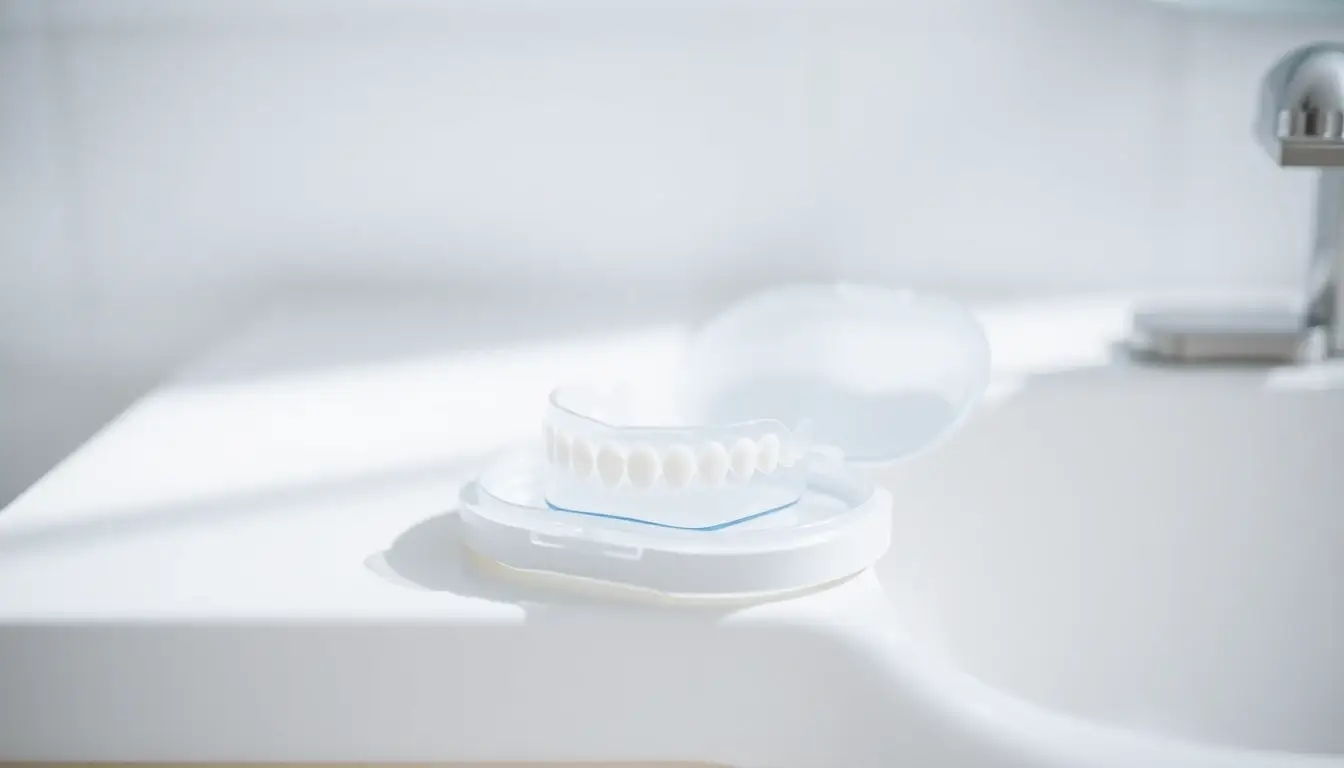
There are three broad types of night guards, and the difference in fit matters more than most people expect.
Stock guards are purchased over the counter, pre-formed and ready to wear. They are cheap but bulky, and because they are not shaped to your mouth, many people find them hard to keep in all night.
Boil and bite guards are also sold in drugstores. You soften the soft plastic in hot water, then bite into it to create a rough impression. Boil and bite guards fit better than stock versions, but they are usually thinner and softer, and some people find that soft material actually encourages chewing.
Custom night guards are made from dental impressions or a digital scan of your teeth, then fabricated by a dental lab to match your bite. A custom-fitted night guard is typically thinner, more comfortable, and more durable than a store-bought option, and your dentist can adjust it so your bite lands evenly.
There are also mail-order companies that send an impression kit to take at home. These can be cheaper than a dentist-made guard, but you are taking the impression yourself, and no dental professional is examining your teeth, your jaw or the cause of the wear.
| Type | Fit | Durability | Best for |
|---|---|---|---|
| Stock (over the counter) | Loose, generic | Low | A short-term stopgap |
| Boil and bite | Approximate | Low to moderate | Light, occasional grinding |
| Custom fitted night guards | Precise, made from your dental impressions | High | Regular nighttime teeth grinding |
Why a Custom Mouth Guard Is Usually Among the Best Night Guards
For people who grind regularly, custom guards tend to be the better long-term choice for three reasons.
Fit drives comfort, and comfort drives use. A guard only protects your teeth if you actually wear it. A customized night guard that sits snugly and does not feel bulky is much easier to keep in through the night.
Material and thickness are chosen for you. Heavy grinders usually need a hard or dual-layer guard. Your dentist can match the material to how hard you grind rather than guessing.
Your bite is checked. A poorly fitted guard can shift the way your teeth meet. A dentist-made guard is adjusted at the fitting appointment, and checked again at your regular visits.
That is why most dentists consider custom night guards the best night guards for nighttime grinding, even though a boil-and-bite guard can be a reasonable short-term option while you wait for a custom one.
Getting Custom Fitted Night Guards: What to Expect
The process is straightforward and usually takes two short visits to the dental office:
- Exam and evaluation. Your dentist looks at wear, your bite, your jaw joints and any damaged dental work, and talks with you about symptoms.
- Dental impressions or a scan. An accurate mold of your upper or lower teeth is taken and sent to a dental lab.
- Fabrication. The lab makes your custom guard to your dentist’s specifications.
- Fitting. At the second visit, the guard is checked and adjusted for a perfect fit and an even bite.
Most patients need a few nights to get used to wearing a guard. Mild extra saliva or a strange feeling at first is normal and usually fades within a week or two.
Canyon Dental Associates checks for signs of grinding as part of every general dentistry visit. If we see wear, we will explain what we found and whether a guard makes sense for you.
Does Dental Insurance Cover Night Guards?
Sometimes, and it is worth checking before you order one.
Coverage for night guards (often listed on plans as occlusal guards) varies widely:
- Some PPO plans cover a guard for diagnosed bruxism, often under basic or major services, with a frequency limit such as one guard every few years.
- Some plans cover a guard only when there is documented damage or a specific diagnosis.
- Some plans exclude night guards entirely.
Canyon Dental Associates accepts and is in network with most major PPO plans, and we will verify your benefits before you commit to treatment. We do not guarantee coverage, since that decision rests with your insurance company. If your plan does not cover a guard, FSA and HSA dollars can usually be used toward one; our guide to using FSA and HSA dollars for dental care explains how. You can also read about what a dental PPO covers at each tier.
What about cost? The cost of a custom night guard varies by material and by case, and it is usually more than a drugstore guard. Weigh it against what grinding can do: a single cracked tooth that needs a crown typically costs more than the guard that might have protected it. We will give you a specific estimate before anything is made.
Caring for Custom Guards So They Last
Proper care keeps a guard clean and extends its life:
- Rinse it every morning and brush it gently with a soft toothbrush and cool water.
- Avoid hot water, which can warp the material.
- Store it dry in its ventilated case, away from pets, who love to chew them.
- Bring it to your checkups so your dentist can look at the fit and the wear pattern.
- Replace it when it cracks, thins through, or stops fitting snugly.
How long a guard lasts depends on how heavily you grind. Some last many years; heavy grinders may need to replace theirs sooner.
Other Ways to Reduce Jaw Clenching and Grinding
A night guard protects your teeth. These steps may help reduce the grinding itself:
- Manage stress with regular exercise, a wind-down routine before bed, or relaxation techniques.
- Cut back on caffeine and alcohol, especially in the evening.
- Notice daytime clenching. Teeth should rest slightly apart when your mouth is closed. Catching yourself clenching during the day can carry over to night.
- Ask about medications. Some medications are associated with grinding. Don’t change anything on your own, but mention it to your doctor.
- Talk to your physician about other treatments if symptoms continue. Some patients explore physical therapy or Botox injections for jaw muscle tension through their medical providers; those are outside the services we provide.
If jaw pain, clicking or limited opening continues, your dentist can evaluate your jaw joints and talk you through next steps.
Protect Your Teeth and Dental Health Before Grinding Causes Damage
Teeth grinding rarely fixes itself, and the damage it causes is cumulative. The earlier you protect your teeth, the more of your natural enamel you keep.
Canyon Dental Associates — 2097 Compton Ave #102, Corona, CA 92881 · (951) 273-0555 · serving Corona, Eastvale, Norco, Jurupa Valley, Temescal Valley and Riverside County since 2007. Contact us to book an exam, and we will verify your PPO benefits first. New patients can also ask about our new patient special.
Frequently Asked Questions
Should a night guard go on the upper or lower teeth?
Either can work. Many dentists make upper guards, but the choice depends on your bite, any dental work, and comfort. Your dentist will recommend the best option for you.
Can I use a sports mouth guard for teeth grinding?
It is not a good substitute. Sports mouth guards are thick and soft, designed to absorb impact, and can be uncomfortable to sleep in. A night guard for teeth grinding is thinner and built for constant pressure.
How long does a custom night guard last?
It varies with how hard you grind. Many last several years with good care. Bring yours to every checkup so your dentist can tell you when it is time to replace it.
Will a night guard stop my headaches?
It may help if your headaches come from nighttime clenching, and many patients report improvement. It is not guaranteed, and headaches have many causes, so see your physician if they continue.
Is a boil and bite guard better than nothing?
Usually, yes, as a short-term measure. For regular grinding, a custom guard tends to fit better, last longer and protect more reliably.